
Legionella Hotel Water Management: A Practical Routine
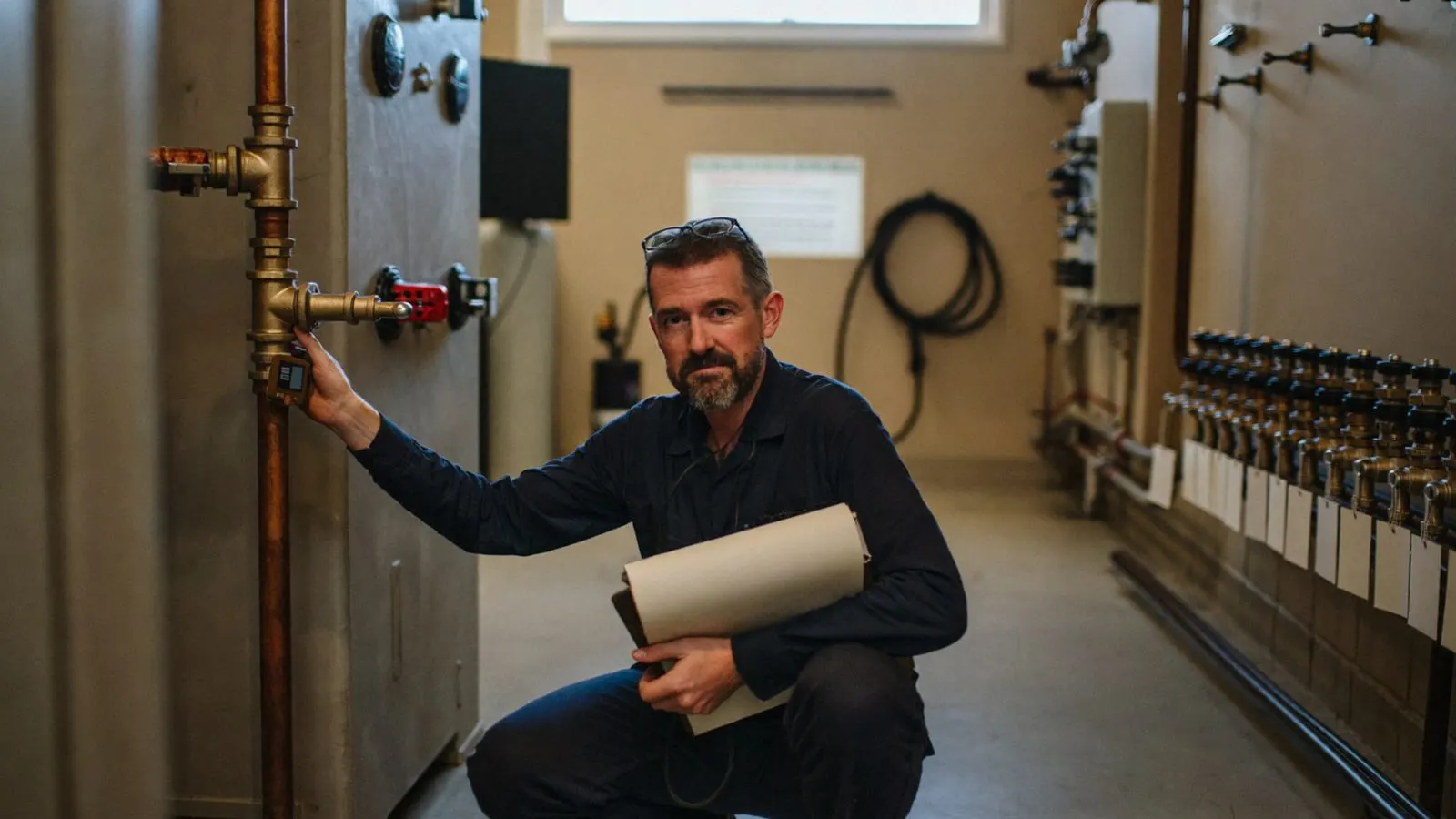
A legionella hotel plan doesn't start with a consultant's binder. It starts with a few readings taken the same way every week, empty rooms flushed on a schedule, the spa and cooling tower each checked by a named person, and someone who signs the page. Here is a routine a chief engineer can run and a GM can audit in five minutes.
A Baltimore hotel is under investigation this month
On November 19, 2026, CBS Baltimore reported that the Baltimore City Health Department is investigating two laboratory-confirmed cases of Legionnaires' disease among guests of the Residence Inn by Marriott at the Johns Hopkins Medical Campus. Officials have not established that the guests caught it at the hotel. They advised guests who stayed overnight on or after September 13 to avoid showering, fill bathtubs slowly with the bathroom door closed, and use bottled water for drinking and brushing teeth. The hotel is working with a water consultant to test its drinking water system, WMAR-2 News reported.
Whatever that investigation finds, the questions a health department asks first are the same everywhere: what were your hot and cold water temperatures, your disinfectant readings, your flushing dates, and what did you do when a reading was out of range? The routine below is how you have those answers on paper before anyone asks.
Start with a small team, a one-page diagram and written limits
Hotels and resorts are frequent settings for outbreaks, and water management programs are now an industry standard for most hotels and tourist accommodations in the United States, according to CDC's guidance for hotel owners and managers. The same body lists seven steps, starting with a program team and a description of your building's water systems.
At a boutique property the team is small:
- Chief engineer: owns the program, takes the readings and closes corrective actions.
- Executive housekeeper: owns the list of empty and out-of-order rooms, and showerhead and aerator cleaning.
- Pool and spa operator: owns chemical tests and the spa log.
- GM: reviews exceptions monthly and signs.
- Outside help: a licensed plumber and your water treatment contractor. CDC notes that a consultant with Legionella-specific expertise may sometimes help.
Draw one page: where water enters, the heaters and recirculation loop, storage tanks, risers, ice machines, the pool and spa, any cooling tower, fountains and misters. Mark the points where you take readings. CDC's terms are simple: control limits are acceptable values for what you monitor, and control points are where control measures are applied, as described in its program steps. Write the limit next to each point. Confirm anything your state or local health authority requires on top.
Take the readings the same way every week
CDC's monitoring guidance says to store hot water above 140°F (60°C), keep circulating hot water from falling below 120°F (49°C), and recirculate continuously if possible. For cold water, Legionella grows best between 77°F and 113°F (25°C and 45°C), may grow as low as 68°F (20°C), and cold water should be stored and circulated below 77°F.
Temperature alone doesn't show the controls are working. The same guidance also calls for measuring disinfectant residual and pH in building water, and comparing the residual where water enters with the residual at fixtures. Set the limit for each with your water treatment contractor and write it on the diagram.
Take readings at the same points each time:
- Water heater or tank outlet.
- Recirculation return.
- The farthest room on each wing or riser, hot and cold.
- Cold storage, if you have it.
- Disinfectant residual and pH where water enters the building and at the farthest rooms.
Use a calibrated probe thermometer, let the flow settle, and log the number, the point, the time and your initials. CDC also suggests measuring how long hot water takes to reach its maximum temperature, which shows whether the loop is working. Start weekly. Let your own records decide whether to change that.
Safety: Water at these temperatures scalds. Let it run away from your hands and body. CDC advises installing thermostatic mixing valves as close to fixtures as possible, which prevents scalding while allowing circulating hot water above 120°F, per its potable water module. Work on heaters, recirculation pumps and mixing valves belongs to a licensed plumber. Isolate power and supply first, and follow the manufacturer's instructions. For residual and pH tests, follow the test kit instructions and the reagent safety data sheet, and wear gloves and eye protection.
A reading outside the limit, whether temperature, residual or pH, is a work order the same day, not a note. Say the far-wing hot return reads low. Recheck, flush that run, have the plumber check the pump and valves, then log what was done and who confirmed the retest. A low residual or out-of-range pH goes to your water treatment contractor the same way.
Flush empty and low-use rooms on a schedule
The CDC toolkit says to flush low-flow piping runs and dead legs at least weekly, and to flush infrequently used fixtures regularly as needed to keep water quality within your control limits. The reason is that low occupancy decreases water flow, which can decrease disinfectant levels and hot water temperature and raise the risk of growth. Rooms out of order, a seasonal wing and the last room on a corridor are the usual culprits. So are staff showers, the gym and banquet restrooms.
A workable weekly routine:
- Every Monday, the front desk and housekeeper produce the list of rooms with no stay in the past seven days, plus any out-of-order rooms.
- Whoever flushes (engineer or an assigned attendant) runs the shower and sink, hot and cold, and flushes the toilet. Run the hot until it reaches temperature and record that reading.
- Stand clear of the spray. The hazard is breathing in water droplets small enough to inhale, per CDC.
- Tick off the room on the log with date and initials.
Also flush after an intrusion event such as a water main break. Components such as water heaters, mixing valves, aerators, showerheads, hoses and filters should be cleaned and maintained as your readings indicate. If a room is taken out of service for a renovation or a long closure, ask your plumber to remove its piping and cap it at the active main or loop to prevent dead legs.
Pools, spas and cooling towers: one named owner each
Spas and pools
For hot tubs, CDC's public pool and hot tub guidance calls for a minimum free chlorine level of 3 ppm or bromine of 4 ppm, and pH of 7.0–7.8. It asks you to test at least twice per day (hourly when in heavy use), and to document the results, your response and equipment maintenance. The pool minimum is 1 ppm free chlorine, or 2 ppm if using cyanuric acid. Your local health code may set different numbers, and it governs.
One more point from CDC's hot tub module: cyanuric acid or stabilized chlorine products should not be used in hot tubs, because they slow disinfection. If a reading is out of range, close the spa, correct it, retest and log the reopening.
Safety: Read the safety data sheet for every chemical. Wear the protection it specifies, never mix products, and keep dosing and equipment repairs with a trained operator or contractor.
Cooling towers and other devices
Many boutique hotels don't have a tower. Ask your HVAC contractor to confirm, and check the roof for evaporative equipment. If you have one, CDC's cooling tower module names sediment and biofilm, temperature, water age and disinfectant residual as the key factors affecting growth. Its cooling tower sheet says disinfectant residual should be monitored and adjusted by an automated system.
Treatment and cleaning belong to your contractor. Your job is to read the service report at every visit, check the residual and pH log, file it, and act when a limit was missed. Isolate power and use a qualified contractor for anything involving fans, heights or tower internals. Add fountains and misters to your diagram too, since CDC's training lists them as devices that may need a program.
Who signs off, and what the records must hold
If someone asks, the records are the program. Each line in the weekly log should hold:
- Date and time.
- System and location (for example, "Wing B, Room 214, hot at tub").
- Reading (temperature, disinfectant residual or pH) and the written limit.
- Pass or fail.
- Initials of the person who took it.
- Corrective action, who closed it and the date.
The chief engineer signs the weekly sheet. The GM reviews the month's exceptions: every out-of-limit reading, how long it stayed open and what fixed it. File contractor reports and the diagram alongside. When something changes, such as a heater replacement, a renovation or a new spa, CDC says to update the program, including control points, limits and corrective actions. Whether to add laboratory testing is a decision for your team, your consultant and your local health authority.
Where software fits
Paper works if the log gets filled in. If it keeps slipping, put the readings and flush rounds on a recurring checklist. In Altoreva Ops, preventive maintenance staff can tick tasks, enter readings, and add notes and photos on the device they already carry. The worklist works offline and syncs when the signal returns. Altoreva also supports measurement-based alerting on those readings. Your water plan, limits and sign-off remain yours. For a broader program, see how to build a PM program and the pool and spa checks.
Altoreva Ops runs preventive maintenance checklists on the devices your team already carries. Staff enter readings, notes and photos, even with no signal, and the work syncs on reconnect.
This article is general guidance for hotel operators, not legal, engineering or safety advice. Codes and regulations vary by jurisdiction and by edition, so confirm what applies to your property with your local authority and a qualified professional. Spot something wrong or out of date? Tell us and we'll correct it.
Last reviewed: 23 November 2026